
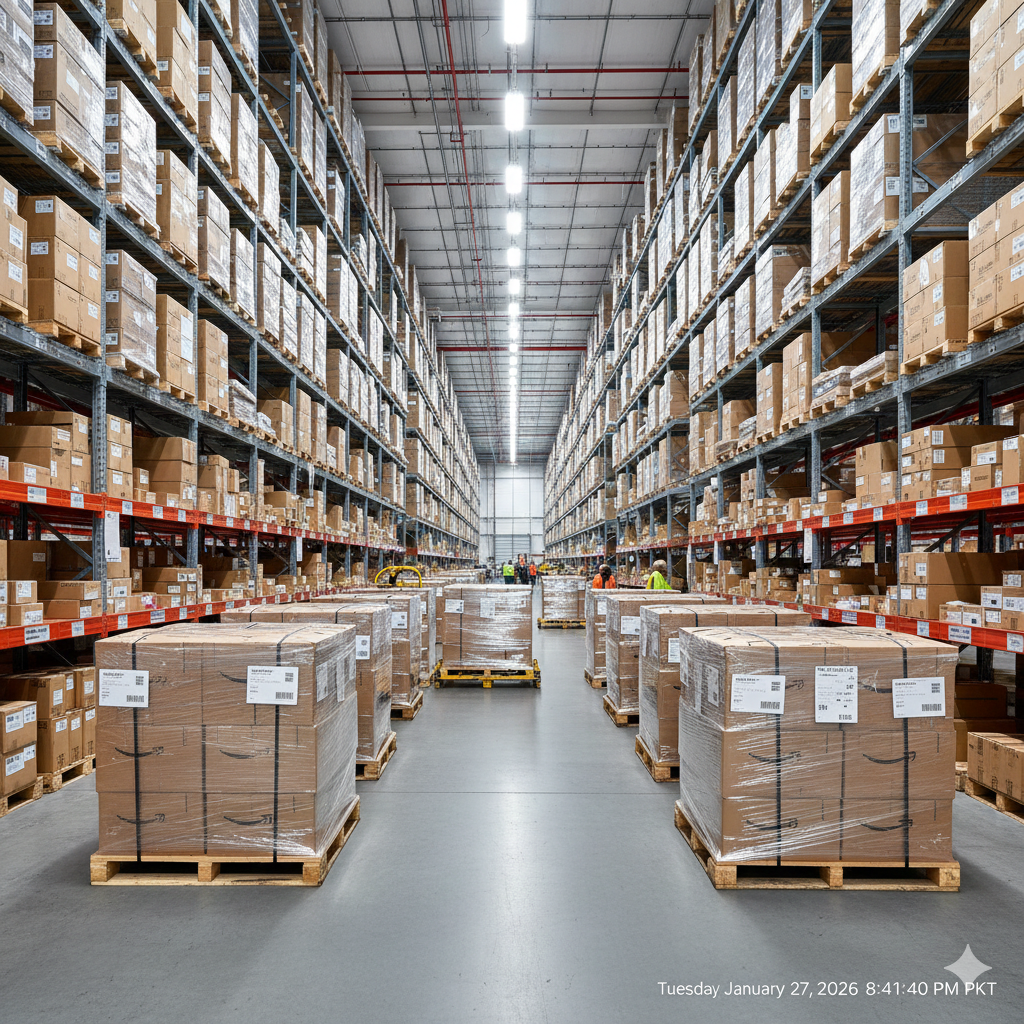
Amazon FBA (Fulfillment by Amazon) has transformed how sellers store, pack, and ship products. One inventory method that often confuses new and even experienced sellers is case-packed inventory. When used correctly, it can significantly streamline operations, reduce handling errors, and improve warehouse efficiency. This guide explains everything you need to know, from how it works to when it makes sense for your business.
What Is Case-Packed Inventory?
Case-packed inventory refers to products that are packed in identical units within the same case. Each carton contains the same SKU, the same quantity, and the same condition. Amazon requires that every unit inside the case be exactly the same—no mixing of SKUs, sizes, or variations.
In Amazon’s fulfillment centers, case-packed shipments are easier to process because they don’t require individual unit sorting. This efficiency is why Amazon strongly encourages sellers to use Case-Packed Inventory in Amazon FBA whenever possible.
How Case-Packed Inventory Works in Amazon FBA
When creating a shipment plan in Seller Central, you will be asked whether your shipment is case-packed or individual units. Selecting case-packed means:
- Each box contains only one SKU
- All boxes have the same number of units
- All items are in new, sellable condition
- Box weight and dimensions are consistent
Amazon scans one unit in the case, verifies the quantity, and then processes the entire carton. This reduces receiving time and lowers the chances of inventory discrepancies.
For sellers moving high volumes of the same product, Case-Packed Inventory in Amazon FBA can be a major time-saver.
Benefits of Using Case-Packed Inventory
1. Faster Receiving at Fulfillment Centers
Case-packed shipments are processed more quickly than mixed or individual-unit shipments. Since Amazon doesn’t need to open and count each unit manually, inventory becomes available for sale faster.
2. Reduced Errors and Miscounts
Uniform cartons reduce human error during receiving. Sellers often experience fewer issues related to missing or miscounted units when using Case-Packed Inventory in Amazon FBA.
3. Lower Prep and Handling Complexity
Packing identical units simplifies prep work. Labeling, counting, and boxing are faster and more predictable, especially when working with a prep service center or manufacturer.
4. Ideal for High-Volume SKUs
If you sell products with steady demand and little variation, case-packed inventory is one of the most efficient fulfillment options.
Amazon’s Requirements for Case-Packed Shipments
Amazon has strict guidelines that sellers must follow. Failure to comply can result in delays, rejections, or added fees.
Key requirements include:
- All units in the case must have the same FNSKU
- Each case must contain the same quantity
- Boxes must not exceed Amazon’s weight and size limits
- Accurate box content information must be provided
Providing incorrect data—such as mismatched quantities—can cause Amazon to convert your shipment into individual units, defeating the purpose of Case-Packed Inventory in Amazon FBA.
Case-Packed vs. Individual Units: Which Is Better?
Choosing between case-packed and individual units depends on your product type and business model.
Case-packed inventory is best when:
- You sell one SKU in large quantities
- Your products are manufactured in bulk
- You want faster check-in times
Individual units work better when:
- You ship multiple SKUs in one box
- Your products have variations (size, color, style)
- You deal with low-volume or test inventory
Many successful sellers use both methods depending on the product.
Common Mistakes to Avoid
Even experienced sellers make errors when using case-packed shipments. Some of the most common include:
- Mixing different SKUs in one carton
- Incorrect unit counts per box
- Inconsistent box dimensions
- Forgetting to label each case correctly
These mistakes can lead to extra fees, shipment delays, or inventory being stranded. Double-checking details before shipping ensures your Case-Packed Inventory in Amazon FBA service arrives smoothly.
Tips for Optimizing Case-Packed Inventory
- Work with Your Manufacturer
Ask suppliers to pack products according to Amazon’s requirements. This saves time and reduces repacking costs. - Standardize Box Sizes
Consistent box dimensions make shipping calculations easier and reduce unexpected fees. - Use Accurate Shipment Data
Always enter correct quantities and box details in Seller Central. - Monitor Receiving Performance
Check receiving reports to identify discrepancies early and file claims if necessary.
Proper planning turns case-packed inventory into a competitive advantage rather than a logistical headache.
Is Case-Packed Inventory Right for Your Business?
For private-label sellers, wholesalers, and brand owners shipping large volumes of the same product, the answer is often yes. Case-Packed Inventory in Amazon FBA offers efficiency, accuracy, and scalability—three critical factors for long-term success on Amazon.
However, sellers with complex catalogs or frequent SKU changes may prefer individual-unit shipments. The key is flexibility and choosing the method that aligns with your fulfillment strategy.
Final Thoughts
Case-Packed Inventory in Amazon FBA is one of the most efficient ways to send products to Amazon fulfillment centers. When done correctly, it reduces errors, speeds up receiving, and simplifies inventory management. Understanding Amazon’s rules and planning your shipments carefully ensures you get the full benefits without unnecessary complications.
Whether you’re scaling an existing product or launching a high-volume SKU, mastering case-packed shipments can help streamline operations and improve overall FBA performance.
Frequently Asked Questions (FAQs)
1. What is case-packed inventory in Amazon FBA?
Case-packed inventory refers to shipments where each box contains identical units of a single SKU, with the same quantity and condition. This method helps Amazon process inventory faster and more accurately.
2. When should sellers use case-packed inventory?
Sellers should use case-packed inventory when shipping large quantities of the same product. It is ideal for private-label sellers, wholesalers, and manufacturers with high-volume SKUs.
3. Can I mix different SKUs in case-packed inventory?
No. Amazon does not allow mixed SKUs in case-packed shipments. Every carton must contain only one SKU with the same number of units.
4. Does case-packed inventory get received faster at Amazon?
Yes. Case-packed shipments are typically received faster because Amazon does not need to count individual units, reducing processing time at fulfillment centers.
5. What happens if my case-packed shipment details are incorrect?
If quantities or box details are incorrect, Amazon may convert the shipment into individual units or charge additional handling fees. Accuracy is essential.
6. Is case-packed inventory mandatory for Amazon FBA sellers?
No, it is optional. Sellers can choose between individual units and case-packed shipments depending on their inventory type and business needs.
7. Are there extra fees for case-packed inventory?
There are no additional fees for properly prepared case-packed inventory. However, errors or non-compliance can result in extra charges.