

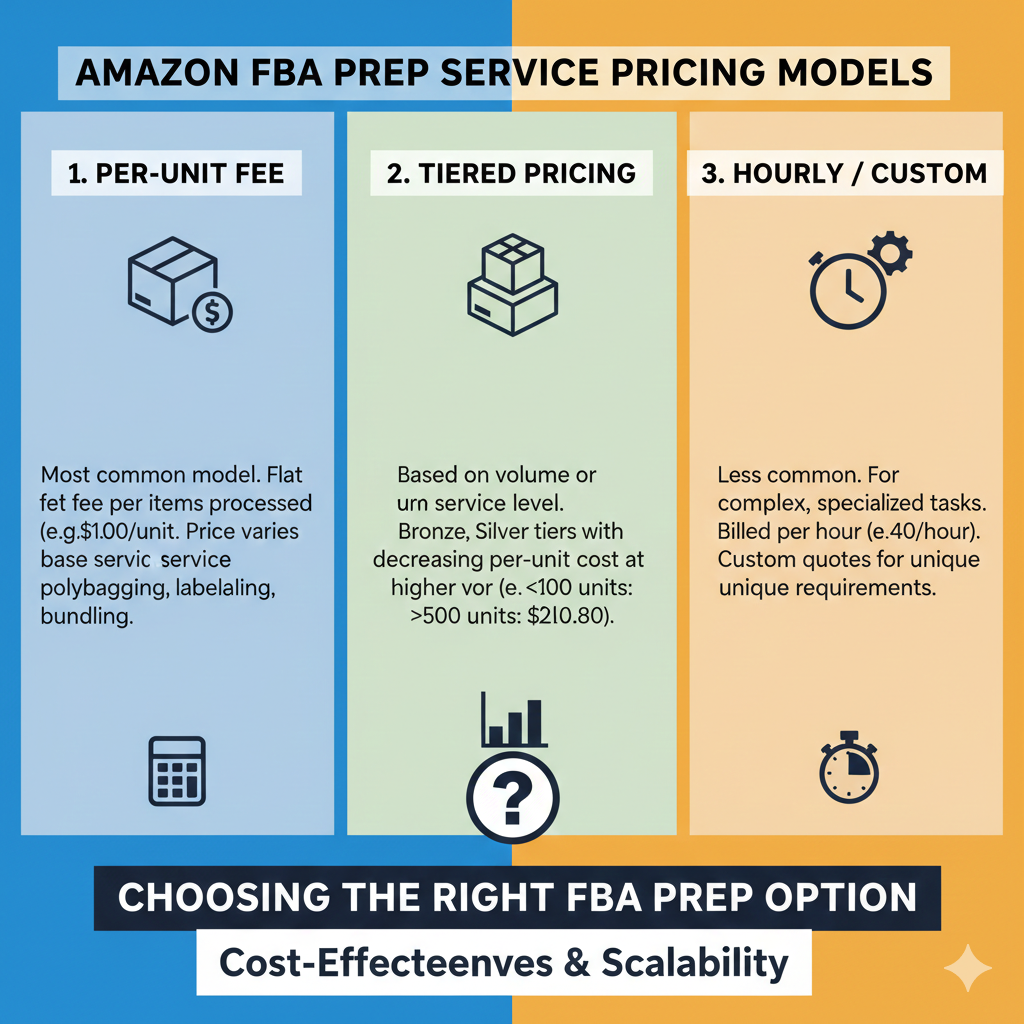
Selling on Amazon FBA has become one of the most scalable ways to grow an eCommerce business, but success depends heavily on preparation accuracy and cost efficiency. This is where third-party prep centers come in. They handle labeling, packaging, inspection, and shipment to Amazon fulfillment centers. However, one of the biggest concerns for sellers is understanding Amazon FBA Prep Service Pricing Models and choosing the one that best fits their business structure.
Different prep centers use different pricing approaches, and selecting the wrong one can significantly impact profit margins. Understanding how these models work helps sellers forecast costs, scale efficiently, and avoid hidden fees.
What Are Amazon FBA Prep Services?
Amazon FBA prep services are third-party companies that prepare inventory according to Amazon’s strict fulfillment requirements. These services typically include receiving shipments, inspecting products, labeling barcodes, poly bagging, bundling, boxing, and shipping items to Amazon warehouses. Since Amazon enforces compliance rules, improper preparation can lead to rejected inventory or additional fees.
This is why sellers must not only select a reliable prep center but also understand how Amazon FBA Prep Service Pricing Models affect overall operational costs.
Common Amazon FBA Prep Service Pricing Models
There are several standard pricing structures used across the industry. Each model suits different seller types depending on order volume, product size, and business goals.
1. Per-Unit Pricing Model
This is the most common pricing structure. Sellers are charged a flat fee per item prepared, usually ranging from $0.80 to $2.50 per unit. This model is ideal for sellers with consistent SKUs and predictable volumes.
Per-unit pricing works best for private label and wholesale sellers because costs scale directly with inventory. Many beginners prefer this model because it is easy to calculate and transparent. Among all Amazon FBA Prep Service Pricing Models, this is the most beginner-friendly option.
2. Subscription-Based Pricing Model
Some prep centers offer monthly subscription plans where sellers pay a fixed fee in exchange for discounted or bundled services. This may include receiving, prep, storage, and customer support.
This model works well for high-volume sellers who want predictable monthly costs. Subscription plans often reduce per-unit fees but may include usage caps. As businesses scale, subscription-based Amazon FBA Prep Service Pricing Models can significantly reduce long-term costs.
3. Hybrid Pricing Model
Hybrid pricing combines multiple elements, such as a low monthly fee plus per-unit charges. Sellers benefit from lower unit costs while maintaining flexibility during slower months.
This model is suitable for growing sellers who experience seasonal demand fluctuations. Hybrid Amazon FBA Prep Service Pricing Models provide balance between affordability and scalability.
4. Customized or Quote-Based Pricing
Larger sellers with complex requirements often receive customized pricing. Factors like oversized items, fragile products, kitting, or international shipments influence costs.
Although this model requires negotiation, it can be cost-effective for businesses with unique needs. Custom Amazon FBA Prep Service Pricing Models are common among enterprise-level sellers and brand owners.
Key Factors That Influence Pricing
Several variables determine how much a seller ultimately pays, regardless of the pricing model chosen:
- Product size and weight
- Number of SKUs
- Prep complexity (bundling, poly bagging, bubble wrapping)
- Monthly volume
- Storage duration
- Shipping destination
Understanding these factors allows sellers to accurately compare Amazon FBA Prep Service Pricing Models and avoid surprise charges.
How to Choose the Right Pricing Model
Selecting the right model depends on your business size and strategy. New sellers should prioritize transparency and flexibility, while high-volume sellers should focus on long-term cost efficiency.
Ask prep centers for detailed pricing breakdowns and service-level agreements. Always calculate landed costs, not just prep fees. The best Amazon FBA Prep Service Pricing Models are those that align with your growth plans while protecting profit margins.
Final Thoughts
Amazon FBA prep services are a powerful tool for scaling an eCommerce business, but pricing structures vary widely. Understanding Amazon FBA Prep Service Pricing Models helps sellers make informed decisions, reduce operational risks, and improve profitability. Whether you’re a beginner or a high-volume seller, choosing the right pricing model can be the difference between steady growth and shrinking margins.