

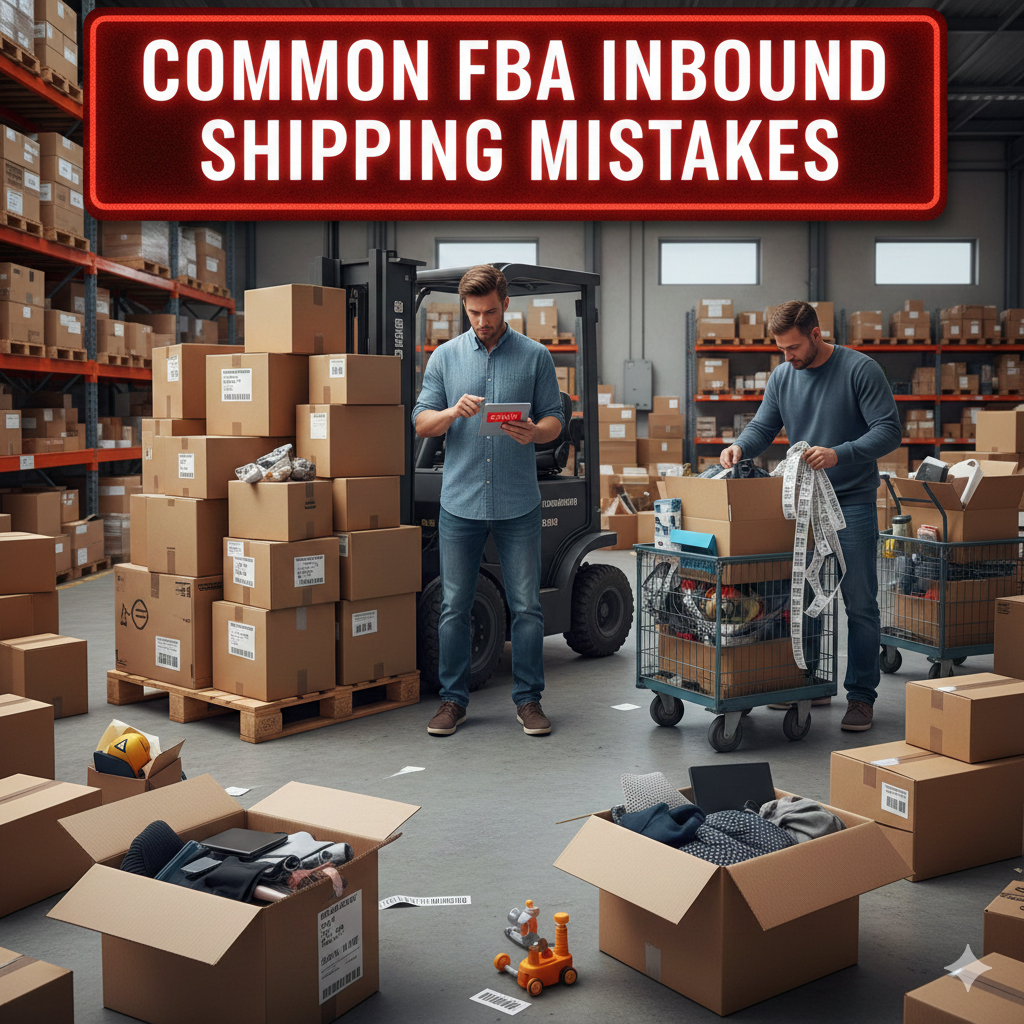
Shipping inventory to Amazon Fulfillment Centers may seem straightforward, but many sellers—both new and experienced—make costly errors during the inbound shipping process. These mistakes can lead to delayed check-ins, extra fees, stranded inventory, or even rejected shipments. Understanding and avoiding Common Amazon FBA Inbound Shipping Mistakes is critical for maintaining account health, reducing operational costs, and ensuring products are available for sale on time.
This article breaks down the most frequent inbound shipping errors sellers make and explains how to prevent them effectively.
Table of Contents
1. Incorrect Product Labeling
One of the most frequent and expensive issues sellers face is improper labeling. Every unit sent to Amazon FBA Prep Logistics must be labeled correctly with a scannable FNSKU barcode unless the product is enrolled in Stickerless, Commingled Inventory.
Common labeling issues include:
- Missing FNSKU labels
- Using manufacturer barcodes instead of Amazon barcodes
- Placing labels over seams, curves, or edges
- Covering other important product information
Amazon relies heavily on barcode scanning for inventory tracking. If labels are unreadable or incorrect, your inventory may be delayed or marked as unfulfillable. Among Common Amazon FBA Inbound Shipping Mistakes, labeling errors are often the fastest way to rack up unexpected prep fees.
How to avoid it:
Always use high-quality thermal labels, double-check SKU assignments, and perform a visual scan test before shipping.
2. Inaccurate Shipment Plan Creation
Many sellers rush through the shipment creation process in Seller Central. Incorrect quantities, wrong box contents, or choosing the wrong shipping method can cause major discrepancies when inventory arrives at the fulfillment center.
Typical problems include:
- Sending more or fewer units than declared
- Not updating box content information
- Mixing SKUs incorrectly in boxes
- Selecting SPD instead of LTL (or vice versa)
Amazon compares what arrives against what was declared in your shipment plan. Any mismatch can trigger investigations, delays, or inventory adjustments—making this one of the most disruptive Common Amazon FBA Inbound Shipping Mistakes.
How to avoid it:
Carefully verify quantities and box contents. If changes occur after shipment creation, always update the plan before sending inventory.
3. Poor Packaging and Box Preparation
Amazon has strict packaging guidelines to protect inventory and ensure warehouse efficiency. Ignoring these rules can result in damaged products or rejected shipments.
Frequent packaging mistakes include:
- Overfilled or underfilled boxes
- Using weak or reused boxes
- Exceeding Amazon’s weight limits
- Failing to use adequate dunnage
Boxes over 50 lbs must be labeled as “Heavy,” and those over 100 lbs require special handling. Violating these requirements is one of the Common Amazon FBA Inbound Shipping Mistakes that leads to carrier issues and warehouse refusals.
How to avoid it:
Use new, sturdy boxes, evenly distribute weight, and follow Amazon’s size and weight limits precisely.
4. Ignoring Amazon’s Prep Requirements
Every product category has specific prep rules. Items like liquids, sharp objects, apparel, and fragile goods require extra preparation such as poly bagging, bubble wrapping, or suffocation warnings.
Common prep mistakes:
- Skipping poly bags for loose items
- Not sealing liquid containers properly
- Missing suffocation warning labels
- Sending fragile items without protective packaging
Failure to follow prep guidelines often results in Amazon charging prep fees—or worse, refusing the shipment altogether. This is a textbook example of Common Amazon FBA Inbound Shipping Mistakes that sellers could easily prevent.
How to avoid it:
Check Amazon’s prep requirements for each ASIN and decide whether to prep in-house or pay Amazon for prep services.
5. Using the Wrong Shipping Method or Carrier
Selecting an inappropriate shipping method can increase costs and cause delivery delays. Sellers sometimes choose Small Parcel Delivery (SPD) when their shipment qualifies for LTL or FTL, or they use non-Amazon-approved carriers.
Issues include:
- Higher shipping costs
- Delivery appointment failures
- Lost or delayed shipments
- Improper pallet configurations
These logistical errors fall squarely under Common Amazon FBA Inbound Shipping Mistakes, especially for sellers scaling their operations.
How to avoid it:
Understand the difference between SPD, LTL, and FTL shipments. Follow Amazon’s pallet and carrier requirements closely.
6. Missing or Incorrect Shipping Labels
Each box or pallet must have the correct Amazon shipping label generated in Seller Central. Missing, damaged, or incorrectly placed labels can delay receiving.
Common problems:
- Labels placed over box seams
- Using outdated shipment labels
- Printing low-resolution barcodes
- Missing pallet labels for LTL shipments
Amazon fulfillment centers rely on these labels to route inventory correctly. Labeling errors remain one of the most overlooked Common Amazon FBA Services Inbound Shipping Mistakes.
How to avoid it:
Print labels using a thermal printer, place them on flat surfaces, and ensure each box has a unique, scannable label.
7. Sending Inventory Without Proper Documentation
For LTL and FTL shipments, missing or incorrect paperwork—such as Bills of Lading (BOL)—can result in refused deliveries.
Mistakes include:
- Incorrect fulfillment center address
- Missing reference numbers
- Incomplete carrier information
Without proper documentation, shipments may sit idle or be returned.
How to avoid it:
Ensure all shipment documents match the details entered in Seller Central and are shared with your carrier in advance.
8. Not Tracking Shipments After Dispatch
Some sellers assume their responsibility ends once inventory leaves the warehouse. Failing to monitor shipment progress can cause unresolved delays or lost inventory.
If problems arise and you don’t act quickly, Amazon may close the shipment without reconciliation.
How to avoid it:
Track shipments proactively, confirm delivery appointments, and follow up if inventory is not checked in within Amazon’s standard timeframe.
Final Thoughts
Avoiding Common Amazon FBA Inbound Shipping Mistakes is essential for running a profitable and scalable FBA business. Most inbound issues stem from rushed processes, poor attention to Amazon’s guidelines, or lack of shipment verification.
By focusing on accurate labeling, proper packaging, correct shipment planning, and active shipment monitoring, sellers can significantly reduce delays, fees, and inventory problems. A disciplined inbound shipping process not only protects your products but also keeps your Amazon account healthy and your customers satisfied.
FAQs: Common Amazon FBA Inbound Shipping Mistakes
1. What are the most common Amazon FBA inbound shipping mistakes sellers make?
The most common mistakes include incorrect product labeling, inaccurate shipment plans, poor packaging, ignoring Amazon prep requirements, and using the wrong shipping method. These errors often lead to delays, extra fees, or rejected shipments at Amazon fulfillment centers.
2. How does incorrect labeling affect Amazon FBA shipments?
Incorrect or missing FNSKU labels can prevent Amazon from properly identifying inventory. This may cause delays in check-in, inventory being marked unfulfillable, or additional labeling fees charged by Amazon.
3. Can Amazon reject an inbound shipment?
Yes, Amazon can refuse inbound shipments if they violate packaging, labeling, weight limits, or documentation requirements. Rejections often occur due to missing shipping labels, incorrect box contents, or improper pallet preparation.
4. What happens if shipment quantities don’t match Seller Central?
If the received inventory does not match the shipment plan, Amazon may flag the shipment for investigation. This can delay inventory availability and may result in inventory adjustments or reimbursement claims.
5. Is Amazon prep service better than self-prep?
Amazon prep service can save time, but it comes with additional fees. Sellers with high volume or fragile items may benefit from professional prep, while experienced sellers can reduce costs by prepping inventory themselves correctly.
6. How can I reduce inbound shipping delays?
You can reduce delays by double-checking shipment plans, following Amazon’s packaging rules, using approved carriers, tracking shipments actively, and ensuring all labels and documents are accurate before dispatch.
7. Does Amazon charge fees for inbound shipping mistakes?
Yes, Amazon may charge labeling fees, prep fees, removal fees, or return shipping costs if inbound shipping requirements are not met.
8. How often should I audit my inbound shipping process?
It’s recommended to review your inbound shipping process regularly—especially after policy updates—to avoid repeating common Amazon FBA inbound shipping mistakes.