




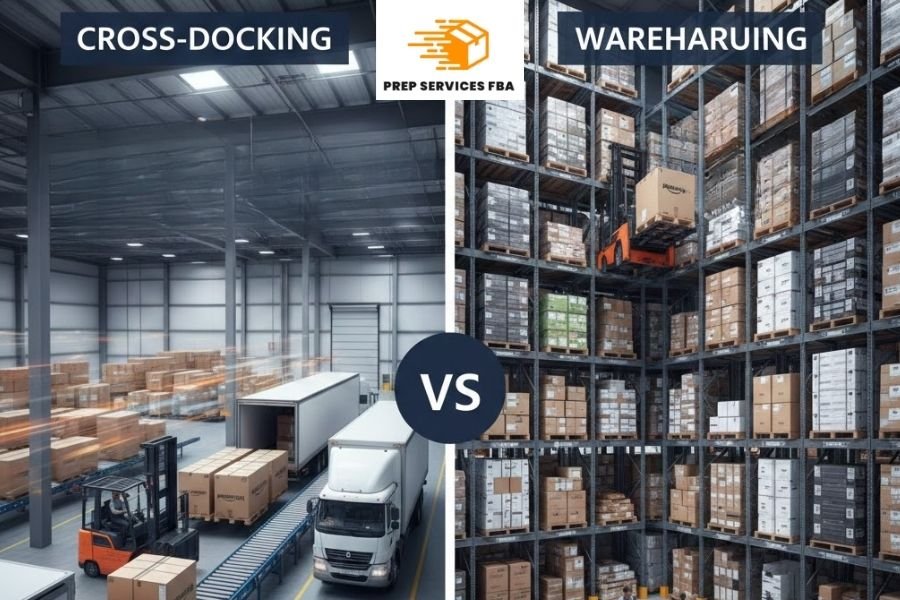
For Amazon sellers, choosing the right logistics strategy can significantly impact storage costs, delivery speed, and overall profitability. Two of the most common fulfillment methods are cross-docking and Warehouse Storage Services. Understanding the difference between cross-docking vs warehousing for Amazon sellers helps you decide which model best supports your business goals.
This guide breaks down how each method works, its advantages, disadvantages, and when Amazon sellers should use them.
What Is Cross-Docking?
Cross-docking is a logistics process where products move directly from inbound transportation (suppliers or manufacturers) to outbound shipping with little or no storage time. Instead of storing inventory, goods are quickly sorted, consolidated, and shipped to Amazon fulfillment centers or customers.
How Cross-Docking Works for Amazon Sellers
- Inventory arrives from the supplier
- Products are sorted and labeled
- Items are immediately shipped to Amazon FBA or end customers
Benefits of Cross-Docking for Amazon Sellers
- Lower storage costs since inventory is not stored long-term
- Faster inventory movement, reducing lead times
- Less handling, minimizing damage risk
- Improved cash flow by avoiding excess inventory
Challenges of Cross-Docking
- Requires precise coordination and accurate demand forecasting
- Not suitable for slow-moving or seasonal products
- Limited buffer stock if demand spikes
Table of Contents
What Is Warehousing?
Warehousing involves storing products in a dedicated facility until they are needed for fulfillment. Amazon sellers often use third-party warehouses or Amazon FBA storage to hold inventory before orders are placed.
How Warehousing Works for Amazon Sellers
- Inventory is received and stored
- Products are managed and tracked
- Orders are fulfilled as demand arises
Benefits of Warehousing for Amazon Sellers
- Better inventory control and stock availability
- Ideal for seasonal or bulk inventory
- Acts as a safety buffer against demand fluctuations
- Supports value-added services like bundling and kitting
Challenges of Warehousing
- Higher storage and handling costs
- Risk of long-term Amazon FBA storage fees
- Slower inventory turnover if demand drops
Cross-Docking vs Warehousing for Amazon Sellers: Key Differences
| Feature | Cross-Docking | Warehousing |
|---|---|---|
| Storage Time | Minimal or none | Long-term |
| Cost Structure | Lower storage costs | Higher storage fees |
| Speed | Faster fulfillment | Moderate |
| Inventory Risk | Low holding risk | Risk of overstock |
| Best For | Fast-moving products | Seasonal or slow-moving goods |
Which Is Better for Amazon Sellers?
The choice between cross-docking vs warehousing for Amazon sellers depends on your product type, sales velocity, and business strategy.
Choose Cross-Docking If:
- You sell fast-moving or trending products
- You want to minimize storage fees
- Your supply chain is reliable and predictable
Choose Warehousing If:
- You sell seasonal or bulky products
- Demand fluctuates significantly
- You need inventory flexibility and buffer stock
Many successful Amazon FBA Services use a hybrid approach, combining cross-docking for high-demand SKUs and warehousing for slower or seasonal items.
Impact on Amazon FBA Costs
Amazon sellers using FBA must consider storage fees, especially long-term storage penalties. Cross-docking helps reduce these costs by limiting inventory time in fulfillment centers, while warehousing provides more control but increases monthly expenses.
Final Thoughts
Understanding cross-docking vs warehousing for Amazon sellers is essential for building an efficient, cost-effective fulfillment strategy. Cross-docking offers speed and lower costs for fast-moving products, while warehousing provides flexibility and security for unpredictable demand.
By aligning your logistics approach with your product type and sales goals, you can improve cash flow, reduce fees, and scale your Amazon business more efficiently.
FAQs: Cross-Docking vs Warehousing for Amazon Sellers
1. What is the main difference between cross-docking and warehousing for Amazon sellers?
The main difference between cross-docking vs warehousing for Amazon sellers is storage time. Cross-docking involves minimal or no storage, while warehousing stores inventory for a longer period before fulfillment.
2. Is cross-docking cheaper than warehousing for Amazon sellers
Yes, cross-docking is usually cheaper because it reduces storage, handling, and long-term inventory holding costs. Warehousing can become expensive due to monthly storage fees and labor expenses.
3. Can Amazon FBA sellers use cross-docking?
Yes, Amazon FBA sellers can use cross-docking to quickly move inventory from suppliers to Amazon fulfillment centers, helping reduce FBA storage fees and speed up restocking.
4. When should Amazon sellers choose warehousing over cross-docking?
Amazon sellers should choose warehousing when dealing with seasonal products, bulk inventory, or unpredictable demand that requires holding safety stock.
5. Is cross-docking suitable for all Amazon products?
No, cross-docking works best for fast-moving products with stable demand. Slow-moving, fragile, or customized products typically perform better in a warehousing model.
6. Can Amazon sellers combine cross-docking and warehousing?
Yes, many Amazon sellers use a hybrid strategy—cross-docking for high-demand SKUs and warehousing for slower or seasonal inventory—to optimize costs and flexibility.
7. How does cross-docking help reduce Amazon FBA storage fees?
Cross-docking minimizes the time products spend in Amazon fulfillment centers, helping sellers avoid long-term storage fees and excess inventory charges.
8. Does warehousing improve inventory control for Amazon sellers?
Yes, warehousing provides better inventory tracking, stock buffering, and order management, making it easier to handle demand fluctuations and product variations.
9. Which option is better for scaling an Amazon business?
Both can support scaling. Cross-docking enables rapid growth with lower overhead, while warehousing offers stability and control as product lines expand.
10. What logistics strategy should new Amazon sellers choose?
New Amazon sellers often start with warehousing for better inventory control, then shift to cross-docking as sales volume and demand predictability improve.